

Detoxification for Health: Myths, Benefits, and Natural Ways to Cleanse Your Body
In today’s fast-paced world, exposure to processed foods, pollution, chemicals, and stress has led many people to seek ways to “detox” their bodies. Detoxification, often referred to as “detox,” is the process of eliminating toxins to restore balance and improve overall health. While the body has its own natural detox system, many lifestyle choices can either support or hinder this process.
What is detoxification?
Detoxification is the body’s natural way of removing harmful substances through organs such as the liver, kidneys, lungs, skin, and digestive system. These organs work continuously to filter out waste and maintain internal balance.
However, poor diet, lack of exercise, stress, and environmental pollutants can overload the body, leading to fatigue, digestive issues, and a weakened immune system. A health-focused detox plan aims to reduce this burden and give the body a chance to reset.
Common Myths About Detox
Before diving deeper, it’s important to separate fact from fiction:
- Myth 1: Detox requires expensive juices or supplements.
Reality: The body already has a powerful detox system. Natural foods, hydration, and lifestyle habits can support it. - Myth 2: Detox means extreme fasting.
Reality: Starvation can harm metabolism. Gentle, nutrient-rich eating is more effective. - Myth 3: Detox works instantly.
Reality: Detoxification is a long-term lifestyle choice, not a quick fix.
Benefits of Detoxification
When done properly, detoxing can offer:
- Improved digestion – better nutrient absorption and reduced bloating.
- Increased energy levels – removal of sluggishness caused by toxins.
- Clearer skin – reduced acne and dullness.
- Stronger immunity – support for the liver and gut health.
- Mental clarity – reduced brain fog and improved focus.
Natural Ways to Support Detoxification
1. Stay Hydrated
Water is essential for flushing out toxins through urine, sweat, and bowel movements. Aim for 8–10 glasses a day.
2. Eat Whole, Nutrient-Dense Foods
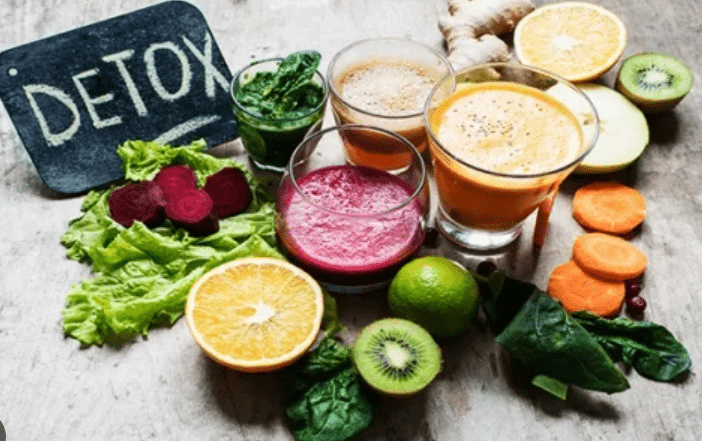
Incorporate fruits, vegetables, whole grains, nuts, and seeds. Leafy greens (like spinach and kale) and cruciferous veggies (like broccoli and cabbage) boost liver function.
3. Boost Fiber Intake
Fiber helps eliminate toxins by supporting healthy bowel movements. Sources include oats, lentils, beans, flaxseeds, and fresh produce.
4. Limit Processed Foods and Sugar
Reduce junk food, sugary drinks, alcohol, and trans fats that burden the liver.
5. Exercise Regularly
Physical activity improves circulation, promotes sweating, and boosts metabolism—key elements in detox.
6. Prioritize Sleep
Quality sleep allows the brain to clear toxins and supports overall repair. Aim for 7–9 hours.
7. Practice Mindful Breathing and Stress Management
Stress can lead to inflammation and toxin buildup. Yoga, meditation, or deep breathing exercises can help.
When to Consider a Detox Plan
A detox-focused lifestyle may benefit you if you experience:
- Frequent fatigue or low energy
- Digestive discomfort or bloating
- Poor skin health
- Brain fog or difficulty concentrating
- Unhealthy eating patterns
Final Thoughts
Detoxification is not about quick fixes or restrictive diets—it’s about supporting your body’s natural cleansing systems through healthy habits. Instead of relying on extreme detox fads, focus on sustainable lifestyle changes like hydration, whole foods, exercise, and stress reduction.
Remember, your body is already equipped to detoxify itself—your role is to create the right environment for it to function at its best.