

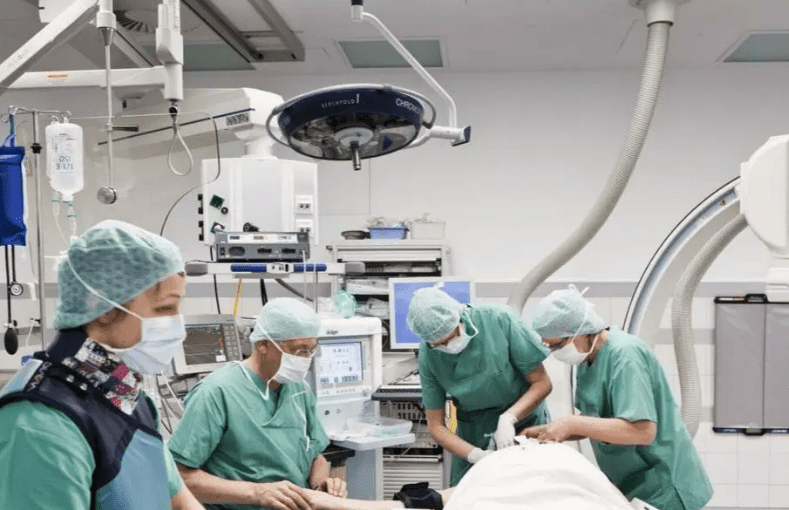
Transforming Pre-Hospital and Transfer Communication for Better Care and Patient Flows
In the high-stakes world of emergency medicine, the ability to communicate seamlessly between pre-hospital and hospital care teams can mean the difference between life and death. Yet, despite advances in digital health, communication gaps continue to challenge the smooth transfer of patients, often leading to treatment delays, overcrowded emergency departments, and compromised patient outcomes.
Now, a new wave of healthcare innovation is transforming how information flows from the field to the hospital, aiming to create a more connected, efficient, and patient-centered emergency care ecosystem.
The Critical Need for Communication Reform
When a patient is in transit — whether in an ambulance, airlift, or inter-hospital transfer — critical clinical data must reach the receiving facility in real time. However, many healthcare systems still rely on outdated radio communication, phone calls, or paper-based handovers, leaving room for delays and misinterpretation.
“Pre-hospital care is often the first and most crucial link in the patient’s journey,” says Dr. Ananya Menon, an emergency medicine specialist. “If that link is weak, it impacts the entire chain of care — from triage to treatment to recovery.”
According to a 2024 study published by the Journal of Emergency Medical Services, nearly 35% of emergency departments experience incomplete or delayed pre-hospital data transmission, leading to extended door-to-treatment times and suboptimal outcomes.
Technology at the Forefront of Transformation
Healthcare innovators are now deploying advanced digital tools to bridge this gap and enable real-time collaboration between EMS (Emergency Medical Services) and hospital teams.
1. Real-Time Data Transmission:
Connected ambulance systems now integrate patient monitoring devices that automatically relay vital signs, ECG readings, and incident summaries to hospitals. This allows physicians to prepare treatment protocols even before the patient arrives.
2. Telemedicine and Remote Guidance:
Video-enabled consultations between paramedics and emergency physicians are helping stabilize critical patients faster. In stroke and cardiac emergencies, early diagnosis via teleconsultation has been shown to improve survival rates by up to 20%.
3. Interoperable Communication Platforms:
New cloud-based platforms designed on HL7 FHIR standards allow EMS and hospital EHRs to share patient data securely and seamlessly. Such interoperability ensures that key clinical details are not lost during transfer.
4. AI and Predictive Triage Tools:
Artificial intelligence is being used to analyze incoming patient data in real time, predicting the severity of conditions and alerting hospitals to prepare specialized resources like trauma units or surgical teams.
5. Smart Navigation and Dispatch Optimization:
AI-driven GPS tools optimize ambulance routing based on traffic patterns and hospital capacity, ensuring patients reach the nearest suitable facility in the shortest possible time.
Streamlining Patient Flows Through Data Integration
Beyond emergency responses, improved communication is also transforming inter-facility transfers — an often-overlooked aspect of healthcare delivery. When hospitals share bed availability, diagnostic data, and transfer protocols through centralized systems, they can better manage patient inflow and capacity.
“Efficient patient flow is about visibility,” explains Ramesh Verma, a hospital operations director. “If both the sending and receiving teams have access to real-time information, we eliminate uncertainty and make faster, safer decisions.”
Hospitals adopting integrated transfer communication systems have reported a 15–25% reduction in patient wait times and improved bed utilization rates, according to a recent HealthTech Insights report.
Benefits Beyond Efficiency
- Faster Emergency Response: Real-time updates reduce the gap between patient pickup and treatment initiation.
- Improved Patient Outcomes: Early data transmission supports better triage and clinical decision-making.
- Enhanced Collaboration: Strengthened coordination between EMS, emergency departments, and specialized care units.
- Resource Optimization: Better allocation of hospital beds, staff, and critical care equipment.
- Data Transparency: Digital documentation ensures accountability and continuous improvement.
The Road Ahead: Towards a Connected Care Ecosystem
The next frontier in pre-hospital communication will likely be driven by 5G networks, IoT-enabled ambulances, and AI-powered analytics. These technologies will support high-speed transmission of video, diagnostic images, and real-time telemetry, giving hospitals a full clinical picture before the patient even arrives.
As healthcare systems continue to prioritize patient-centered care and operational efficiency, the integration of smart communication tools will be essential to achieving both.
The transformation of pre-hospital and transfer communication is not just a technological upgrade — it’s a fundamental shift toward safer, faster, and more coordinated care.