

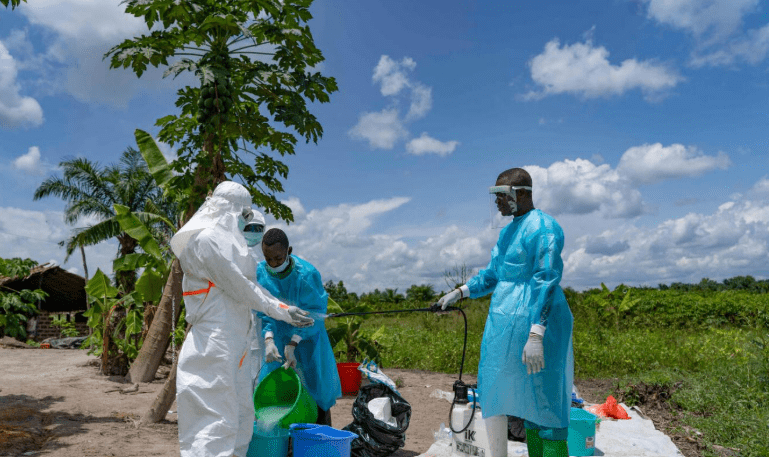
Ebola virus disease resurfaces in remote village of the Kasaï Province, Democratic Republic of the Congo — 16th outbreak in the country
In September 2025, the Democratic Republic of the Congo (DRC) declared a new outbreak of Ebola virus disease in the Kasaï Province, marking the country’s 16th recorded outbreak of this deadly condition. (The Guardian)
The outbreak began in a remote village called Bulape, where a number of deaths—including those of a two-year-old girl, her mother, and grandmother—were reported.
Spread & Figures
By mid-October, reports said there were at least 64 confirmed or suspected cases, of which 45 had died and 19 had recovered.
Why This Outbreak Matters
- Location & infrastructure challenges – Bulape is remote, with limited health infrastructure and few trained local healthcare workers. That complicates containment and care. (The Guardian)
- High fatality & severity – Ebola remains one of the most lethal viral diseases, especially in settings with weak health systems.
- Fresh spill-over/unknown origin – According to genomic sequencing and reports, this outbreak appears to result from a new zoonotic spill-over event, not a direct continuation of previous outbreaks. (Wikipedia)
Response & Containment Efforts
- Authorities, including Médecins Sans Frontières (MSF) and World Health Organization (WHO), set up a 32-bed treatment center in Bulape to care for patients.
- Vaccination campaigns were launched early: over 35,000 people were vaccinated in efforts to block spread.
- A “countdown” of 42 days without new cases began once the last patient was discharged, a key milestone toward officially declaring the outbreak over.
Key Challenges
- Stigma: Survivors like Bope Mpona Héritier (one of the recoveries) faced social stigma, which complicates reintegration and community response.
- Remote logistics: Transporting vaccines, supplies, and trained staff to remote zones with poor access remains a huge barrier.
- Uncertain source: While genomic work suggests a new spillover, full clarity on the animal source or transmission chain remains lacking. That means the risk of future outbreaks remains.
- Public health alertness: Such outbreaks test local and global readiness—especially in regions with fragile systems.
Implications for Global Health
- This outbreak underscores that Ebola is not behind us — the world cannot assume that major viral threats vanish after prior responses.
- The fact that this is a fresh zoonotic event signals ongoing risk from animal-borne viruses.
- Rapid response, vaccination, and containment are still the gold-standard for limiting spread — the speed and coordination in this case likely prevented even greater devastation.
- For countries like India (including your region of Maharashtra), such global outbreaks reinforce the importance of vigilance: strong surveillance systems, readiness to deploy rapid diagnostics, and coordinated public health planning matter.
- On a macro level, the outbreak aligns with broader commentary that pandemics are a choice—we have tools and knowledge, but the success of containment depends on investment, preparedness, and global cooperation.
What Should Individuals & Organizations Watch For
- Stay informed about outbreaks globally, especially in regions with travel or trade links.
- For NGOs, health agencies, and corporate health teams: ensure clear protocols for response, even for distant outbreaks, because viruses don’t respect borders.
- For general public: understanding signs of serious viral illness (e.g., high fever, unexplained hemorrhage, severe symptoms) matters; early detection is key.
- For policy and business leaders: strengthening health system capacity, global collaboration, and pandemic-ready infrastructure is not optional—it’s essential.
Final Word
This new Ebola outbreak in DRC is a stark reminder: viral threats are ever-present. Even as some media attention shifts away after the big pandemics, the next serious outbreak can emerge quietly, in a remote village, and rapidly escalate. The key lies in speedy detection, strong public health response, and global cooperation—because in our interconnected world, no country is isolated.